Sub-Zero Beverage Cooler Repair in Irvine & Orange County
Repair for Sub-Zero undercounter beverage centers and beverage coolers, including UC-24BG, UC-15BG, and related models. Dual-zone temperature diagnostics, compressor and thermoelectric system service, and door seal repair by technicians who work on Sub-Zero every day.
 Service call fee waived with completed repair
12-month warranty
Genuine OEM Sub-Zero parts
Service call fee waived with completed repair
12-month warranty
Genuine OEM Sub-Zero parts 5.0/5
Google Rating
20+k
Appliances Serviced
10+k
Satisfied Customers
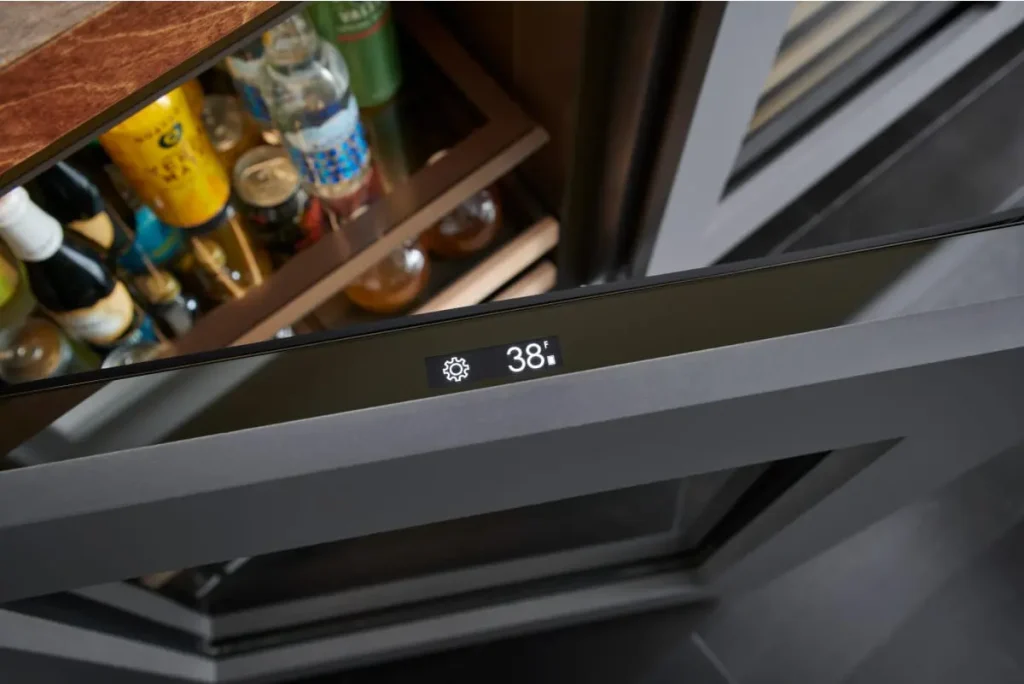
If your Sub-Zero beverage cooler is not holding temperature, one zone is running warmer than the other, the unit is vibrating or noisy, or the display is showing a fault, you need a technician who works on Sub-Zero undercounter units regularly, not one who treats them as a smaller refrigerator.
Sub-Zero beverage coolers use precision cooling with tighter temperature tolerances than standard refrigeration, typically 34 to 40°F for the beverage section, with independent setpoints on dual-zone configurations. The control architecture, thermistor placement, and airflow design are specific to each model and are not interchangeable with generic undercounter units. A misdiagnosis here means the unit still runs inconsistently after the service call.
These are also built-in appliances, front-vented and installed flush into cabinetry. Service requires the same panel-handling care as any Sub-Zero built-in unit.
Sub-Zero Beverage Cooler Models We Repair
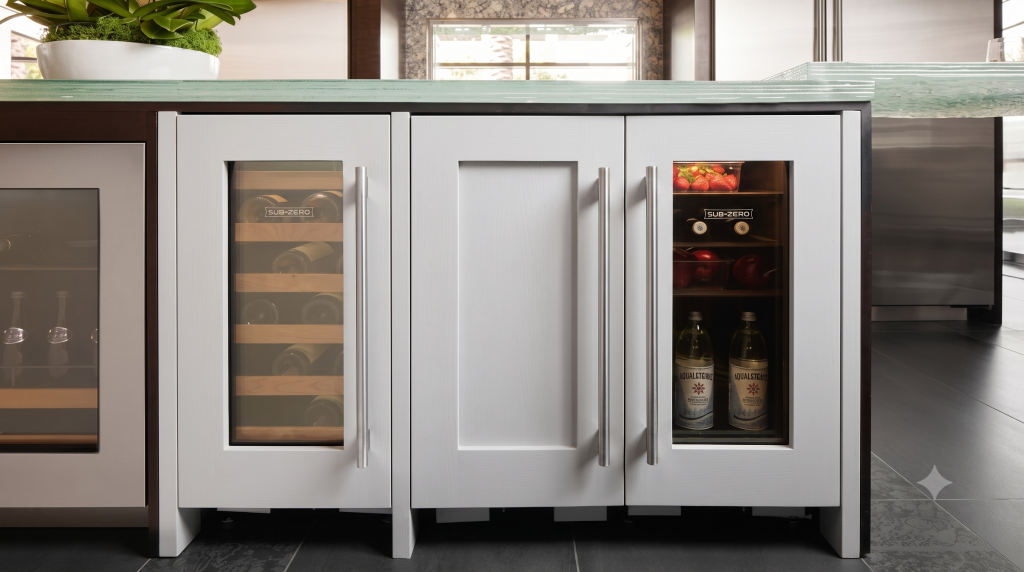
We service Sub-Zero undercounter beverage centers across current and previous generations in single-zone and dual-zone configurations.
-
UC-24BG Undercounter Beverage Center
24-inch built-in unit with a single temperature zone tuned for beverages at 34 to 40°F. Front-vented for flush cabinetry, glass door with a UV-resistant coating. Service covers the compressor, evaporator fan, thermistor, door gasket, control board, and interior lighting.
-
UC-15BG Undercounter Beverage Center
15-inch built-in unit for tighter installations such as bar areas, butler's pantries, and kitchen islands. Same front-ventilation requirement as the 24-inch model. The smaller cabinet leaves less margin for error during panel removal and reinstallation.
-
Dual-Zone Beverage Cooler Configurations
Two independently controlled temperature zones in one cabinet. Both zones share a single compressor but use separate airflow paths managed by dedicated fans and dampers. When one zone runs warm, diagnosis isolates the zone-specific component rather than assuming a compressor fault.
-
Older Sub-Zero Undercounter Beverage Models
Previous-generation units are no longer in production but still in service. OEM parts are available for most through Sub-Zero's parts network. We confirm parts availability before scheduling.

Common Sub-Zero Beverage Cooler Problems We Diagnose and Fix
When a Sub-Zero beverage cooler drifts off temperature, runs noisily, or leaves one zone warm, the cause is usually specific to these precision undercounter systems. These are the faults we diagnose most often across Orange County.

Not Cooling or Running Warm
A unit that runs but stays above setpoint usually points to a dirty or blocked condenser, a failing evaporator fan, a refrigerant leak, or a faulty thermistor. On front-vented units in tight cabinetry, a blocked front grille is a frequent factor.

One Zone Warmer Than the Other
On dual-zone models both zones share one compressor but run separate airflow paths. A warm zone points to a failed damper, a zone-specific fan, or a thermistor error, not the compressor itself.

Temperature Swings
A unit that cycles between too warm and too cold usually has a thermistor reading error, a control board fault, or a gasket letting warm air in. We log actual cabinet temperature to find the pattern.

Condensation on the Glass or Inside
Exterior condensation is normal in a warm, humid room. Persistent interior condensation means the door gasket is no longer sealing, which also makes the compressor run harder over time.

Loud Noise or Constant Running
Louder humming or vibration usually means the compressor is working too hard, often from a dirty condenser or a refrigerant issue. Rattling points to the condenser fan. A compressor that never cycles off is fighting a hidden fault.

Sealed-System, Lighting, and Display Faults
Compressor, evaporator, and refrigerant failures need a full evacuation and recharge. Interior lighting and control-panel faults are handled with OEM parts matched to your model.
Not Cooling or Running Warm
A unit that runs but stays above setpoint usually points to a dirty or blocked condenser, a failing evaporator fan, a refrigerant leak, or a faulty thermistor. On front-vented units in tight cabinetry, a blocked front grille is a frequent factor.
One Zone Warmer Than the Other
On dual-zone models both zones share one compressor but run separate airflow paths. A warm zone points to a failed damper, a zone-specific fan, or a thermistor error, not the compressor itself.
Temperature Swings
A unit that cycles between too warm and too cold usually has a thermistor reading error, a control board fault, or a gasket letting warm air in. We log actual cabinet temperature to find the pattern.
Condensation on the Glass or Inside
Exterior condensation is normal in a warm, humid room. Persistent interior condensation means the door gasket is no longer sealing, which also makes the compressor run harder over time.
Loud Noise or Constant Running
Louder humming or vibration usually means the compressor is working too hard, often from a dirty condenser or a refrigerant issue. Rattling points to the condenser fan. A compressor that never cycles off is fighting a hidden fault.
Sealed-System, Lighting, and Display Faults
Compressor, evaporator, and refrigerant failures need a full evacuation and recharge. Interior lighting and control-panel faults are handled with OEM parts matched to your model.
What You Get with Every Bristol Repair

Daily work with high-end brands

Accurate diagnosis before any part is ordered

Upfront pricing: you approve the quote before we begin
12-month warranty on parts, 6 months on labor

Licensed and insured in California

Floors and cabinetry protected throughout the visit
view all questions
Frequently Asked Questions

Have Questions About Your Repair?
Tell us the brand and what the appliance is doing, and a technician will take it from there.
Why is one zone of my Sub-Zero beverage cooler warmer than the other?
On dual-zone beverage coolers, both zones share a single compressor but use separate airflow paths controlled by individual fans and dampers. When one zone runs warm while the other holds temperature, the compressor is not the problem. A failed damper, a zone-specific fan fault, or a thermistor reading error is almost always the cause. Diagnosis isolates the affected zone's components rather than treating the unit as a single system.
Why is there condensation on my Sub-Zero beverage cooler door?
Condensation on the exterior glass is normal when the room is warmer and more humid than the interior. Persistent condensation on the interior glass or inside the cabinet points to a door gasket that is no longer sealing, so warm, humid air enters and condenses on the cold surfaces. A failed gasket also makes the compressor run more often and can cause temperature drift over time. Replacement requires the correct model-specific gasket, because generic seals do not match the Sub-Zero door frame profile.
What temperature should a Sub-Zero beverage cooler be set to?
Sub-Zero beverage coolers are designed to hold the beverage section around 34 to 40°F, and dual-zone models let you set each zone independently within that range. If you have set the unit correctly and it still will not hold temperature, the issue is mechanical rather than a setting, usually airflow, a thermistor, or the sealed system. We measure actual cabinet temperature with a calibrated instrument rather than relying on the display.
My Sub-Zero beverage cooler is making noise. What is causing it?
A light hum during cooling is normal. Louder humming or vibration usually means the compressor is working harder than it should, often from a dirty condenser or a refrigerant issue. Rattling typically comes from the condenser fan contacting debris or a loose component. A high-pitched sound during the cooling cycle can point to a refrigerant pressure problem. Each sound points to a different part, so the technician listens to the unit running before starting any diagnostic work.
Need Sub-Zero Service?
Our licensed, insured technicians are ready to dispatch to your Orange County home.