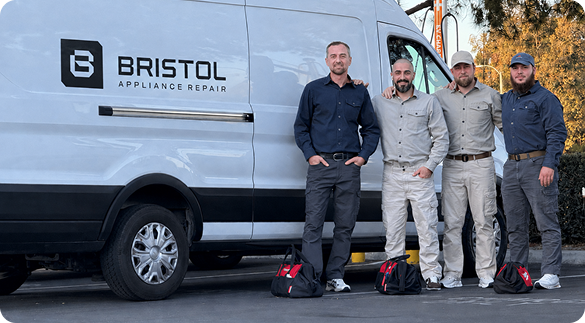
High-End Dryer Repair
in Irvine & Orange County
Same-day service for heat pump, condenser, and vented dryers diagnosed and repaired by specialists who work with these systems daily.
 Service call fee waived with completed repair
12-month warranty
OEM parts
Service call fee waived with completed repair
12-month warranty
OEM parts 5.0/5
Google Rating
20+k
Appliances Serviced
10+k
Satisfied Customers
Common high-end drying issues solved

Drum turning through the full cycle with no warm air.

Cycle finishing with the load only partly dry.

Loads taking noticeably longer than they used to.

Motor running or humming with no drum movement.

Overflow, or a tank filling far faster than usual.

Digital display showing a technical fault sequence.
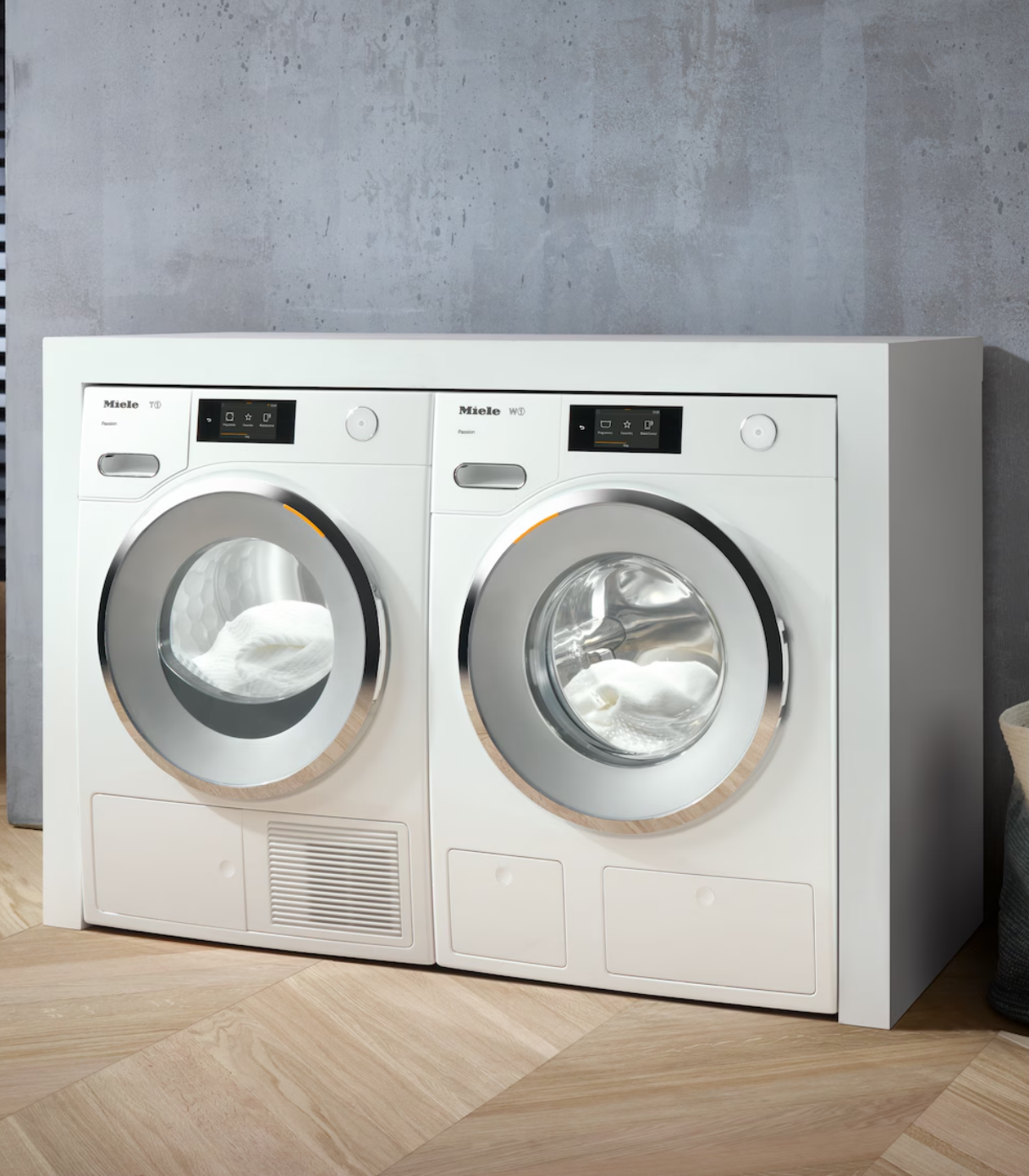
Brand-specific technical mastery for high-end drying systems.








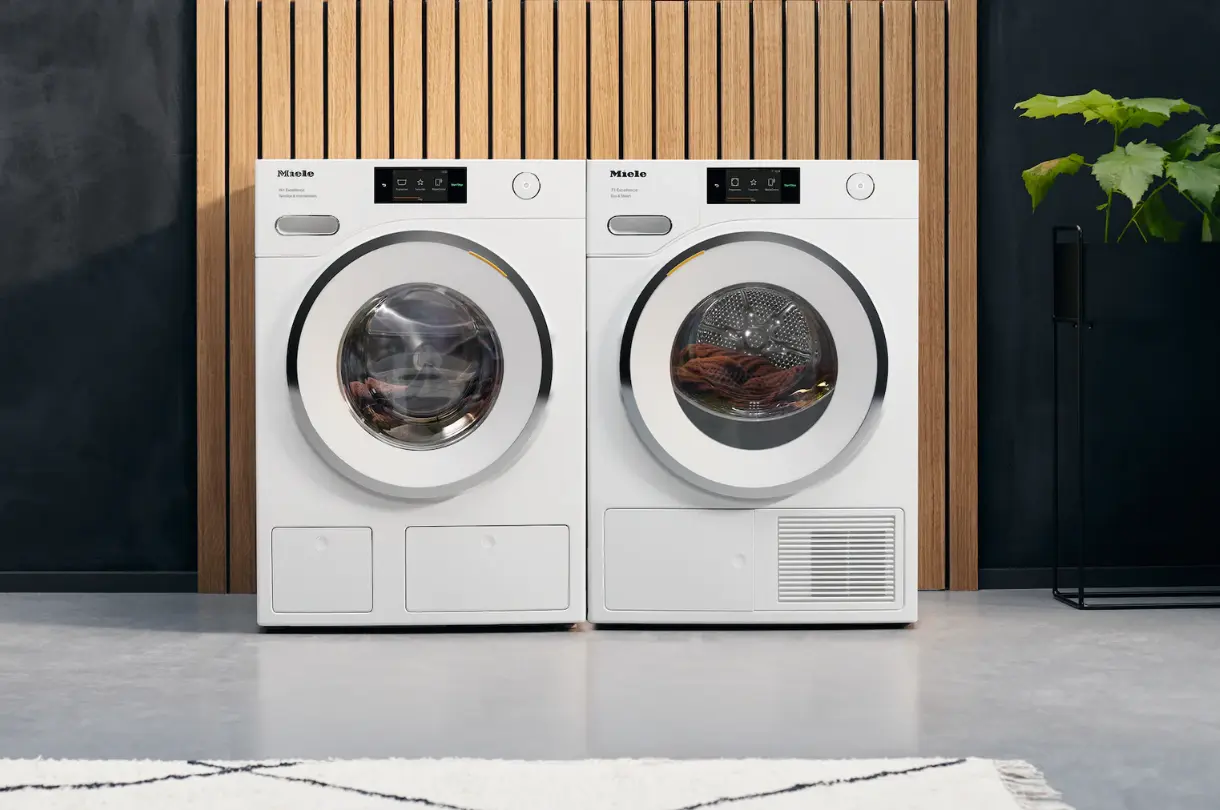
Ventless machines that recycle heat through a closed refrigerant loop and collect moisture in a tank or drain line. Common across Miele T1 and Bosch heat pump laundry.
Ventless units that cool moist air across a heat exchanger, drawing condensate into a removable reservoir. Common across Miele and Bosch compact laundry.
Traditional machines exhausting moist air through ducting to an exterior wall or roof vent. Common across Miele and Bosch 500 and 800 Series.
Column installations mounted above a washer, or compact units set into a closet or cabinetry run. Common across Miele and Bosch compact laundry.

Miele T1 and Bosch heat pump dryers run a sealed refrigerant loop rather than a heating element, so a cold cycle is a sealed system or evaporator issue, not a burnt-out element. We diagnose the circuit and the airflow path before recommending any part.

These machines end a cycle on conductivity readings from drum sensors rather than a timer. We compare live sensor values against actual load conditions to find whether damp results come from the sensor, the exchanger, or restricted airflow.

Condenser and heat pump units move water to a reservoir or a drain line running through cabinetry or an upper-floor closet. We check the pump, the float, and the drain path together, since an overflow tray points to a blockage more often than a failed pump.

Drying systems depend on precisely matched heat exchangers, drum bearings, and control boards built for the exact model. We install only original OEM components to protect your machine's performance, longevity, and warranty.

Need Dryer Service?
Our licensed, insured experts are ready to dispatch to
your Orange County home.
Should I stop using the dryer until you arrive?
In most cases, yes. A machine that runs long, gets hot to the touch, or smells of scorching should be left off until we inspect it, since restricted airflow puts real strain on the unit. If it simply will not start, there is no harm in leaving it alone.
My dryer runs but the clothes stay damp. Where does that usually come from?
Most often it is airflow or moisture sensing rather than the heat source. A blocked lint path, a fouled heat exchanger, or a sensor reading a dry load too early will all end a cycle before the laundry is finished. We check the airflow path first, since it is the most common cause and the least expensive to correct.
My cycles have slowly gotten longer over the past year. Is that normal wear?
No, it is a signal worth acting on. Gradual slowdown almost always means restricted airflow building up in the filter, the exchanger, or the ducting, and a machine working harder each cycle wears its components faster. Addressing it early avoids a larger repair.
Why is water collecting under my ventless dryer?
The condensate is not reaching its destination. A blocked drain line, a stuck float, or a full reservoir with a faulty level switch will all send water where it does not belong. We trace the full path rather than replacing the pump on assumption.
Can you service a dryer stacked above a washer?
Yes, we do. Stacked columns are routine for us. We separate the units safely where the repair requires it and protect the surrounding flooring and cabinetry throughout.
Do you inspect the venting and ducting as part of the repair?
Yes, we do. Airflow is the most common cause of poor drying performance, so we check the lint path and the duct run on a vented unit as part of the diagnosis rather than treating it as a separate service.
Can you service the washer and dryer in the same visit?
Yes, we do. If both units need attention, we diagnose them together and quote each separately so you can decide what to move forward with.
What Our Customers Say
Real feedback from homeowners who trust us with their appliances - quality service, honest pricing, and reliable results
Need High-End Appliance Repair?
Let us know the brand and what's happening with your appliance. We'll schedule a visit, diagnose the actual cause of the problem, and recommend the right repair.