Viking Cooktop & Rangetop Repair in Irvine & Orange County
Repair for Viking gas rangetops and gas, induction, or electric cooktops. Sealed brass burners, induction coils, downdraft ventilation, and electronic touch controls, diagnosed by technicians who work on high-end brands every day.
 Service call fee waived with completed repair
12-month warranty
Genuine OEM Viking parts
Service call fee waived with completed repair
12-month warranty
Genuine OEM Viking parts 5.0/5
Google Rating
20+k
Appliances Serviced
10+k
Satisfied Customers
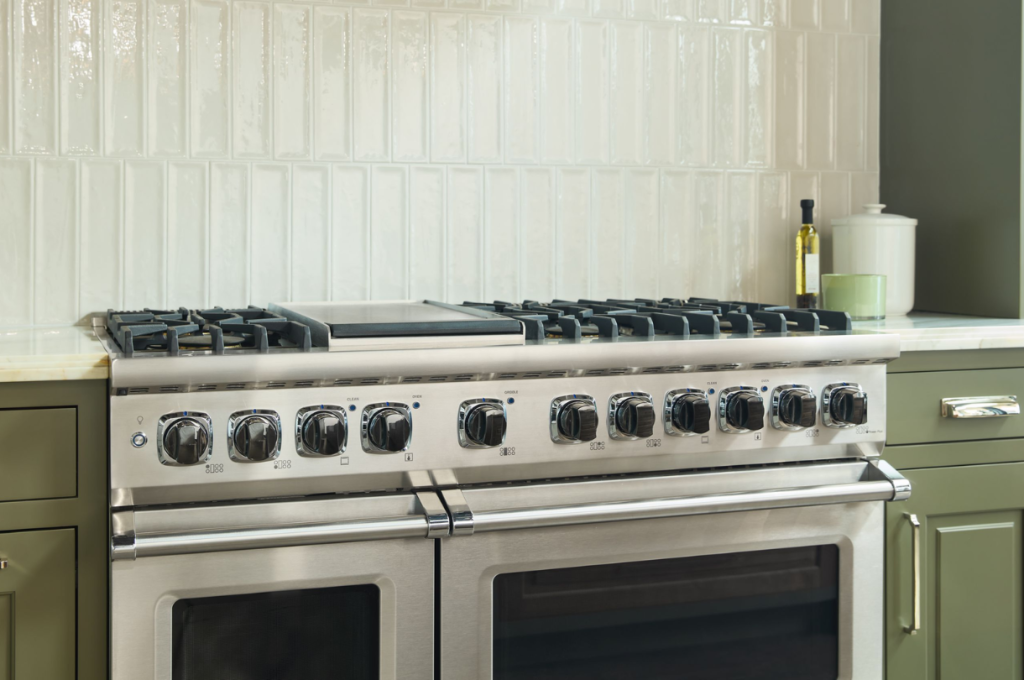
Viking cooktops and rangetops look similar but are different products. A rangetop has front controls and the heavier build of a range with no oven beneath it, so it is usually installed alongside a separate wall oven. A cooktop drops into the counter with its controls on or near the surface. Both are common in Orange County kitchens.
What matters for the fix is the technology underneath, not the label. That is why Viking cooktop repair, and Viking rangetop repair alike, start with identifying the system rather than the name on the spec sheet. A gas burner that will not light is a gas-side fault: an igniter, a valve, or a clogged port. An induction zone that has quit is purely electronic, since gas and induction models share almost no parts. An electric radiant surface fails differently again, usually at the element itself.
Downdraft models add a whole separate system. A blower motor or vent actuator going quiet has nothing to do with the cooking surface, even when both seem to fail at once. We diagnose the surface and the ventilation on their own so the repair matches the actual fault.
Viking Cooktop & Rangetop Models We Repair
We service every Viking surface cooking product, from gas rangetops to induction, electric radiant, and downdraft models.
-
Viking Professional Gas Rangetops
Front-control gas rangetops in 30 to 48 inch widths with sealed brass burners rated up to 18,500 BTUs on flagship models. Service covers igniters, gas valve assemblies, and burner port cleaning.
-
Viking Gas Cooktops
Flush-mounted gas cooktops with surface or adjacent controls. Same ignition diagnostics as the rangetops, with added attention to the surface-mounted control module.
-
Viking Induction Cooktops
Fully electronic cooking zones with no open flame. Service covers induction coils, inverter boards, and touch-control diagnostics.
-
Viking Electric Radiant Cooktops
Glass-ceramic surfaces that heat with resistive elements rather than induction coils, so they work with any flat cookware. The service covers the elements, surface sensors, and control module, distinct from both gas ignition and induction electronics.
-
Viking Downdraft Rangetops & Cooktops
Integrated ventilation that pulls smoke and steam downward instead of through an overhead hood. Service covers the cooking surface plus the downdraft blower, vent actuator, and filters.

Common Viking Cooktop & Rangetop Problems We Diagnose and Fix
Gas, induction, and electric surfaces fail in different ways. Here is what each symptom usually points to.

Gas Burner Not Igniting or Igniting Weakly
Clicking with no flame, or a weak flame, usually means a clogged burner port, a fouled igniter, or a gas valve not opening. We test spark and gas flow separately before replacing anything.

Induction Zone Not Detecting Cookware
An induction zone reads the pan through the coil's magnetic field. If it will not detect, the cause is usually a coil fault, an inverter board issue, or cookware that is not induction compatible. We confirm with known-good cookware first.

Electric Radiant Element Not Heating
On glass-ceramic cooktops a zone that will not heat is usually the element itself burning out, a damaged wire connection, or a control board not sending voltage. We confirm the technology, then test the element and its supply.

Uneven or Yellow Flame Across Burners
Flames that differ from burner to burner, or burn yellow instead of blue, point to clogged ports, an air-shutter adjustment, or a gas-pressure issue. We clean, adjust, and verify a clean blue burn.

Touch Controls Not Responding
A surface control panel that stays dark or ignores input can be a failed control module, a wiring fault, or moisture trapped under the glass. We isolate the module from the wiring before replacing it.

Downdraft Not Pulling Air
A downdraft that has gone weak or silent usually means a failed blower motor, a vent actuator that is not opening, or a clogged filter. We test the ventilation separately from the cooking surface.
Gas Burner Not Igniting or Igniting Weakly
Clicking with no flame, or a weak flame, usually means a clogged burner port, a fouled igniter, or a gas valve not opening. We test spark and gas flow separately before replacing anything.
Induction Zone Not Detecting Cookware
An induction zone reads the pan through the coil's magnetic field. If it will not detect, the cause is usually a coil fault, an inverter board issue, or cookware that is not induction compatible. We confirm with known-good cookware first.
Electric Radiant Element Not Heating
On glass-ceramic cooktops a zone that will not heat is usually the element itself burning out, a damaged wire connection, or a control board not sending voltage. We confirm the technology, then test the element and its supply.
Uneven or Yellow Flame Across Burners
Flames that differ from burner to burner, or burn yellow instead of blue, point to clogged ports, an air-shutter adjustment, or a gas-pressure issue. We clean, adjust, and verify a clean blue burn.
Touch Controls Not Responding
A surface control panel that stays dark or ignores input can be a failed control module, a wiring fault, or moisture trapped under the glass. We isolate the module from the wiring before replacing it.
Downdraft Not Pulling Air
A downdraft that has gone weak or silent usually means a failed blower motor, a vent actuator that is not opening, or a clogged filter. We test the ventilation separately from the cooking surface.
What You Get with Every Bristol Repair

Daily work with high-end brands

Accurate diagnosis before any part is ordered

Upfront pricing: you approve the quote before we begin

12-month warranty on parts, 6 months on labor

Licensed and insured in California

Floors and cabinetry protected throughout the visit
view all questions
Frequently Asked Questions

Have Questions About Your Repair?
Tell us the brand and what the appliance is doing, and a technician will take it from there.
What is the difference between a Viking rangetop and a cooktop?
A rangetop has front-facing controls and the heavier build of a Viking range, but with no oven beneath it, so it is usually installed alongside a separate wall oven. A cooktop drops into the countertop with its controls on or near the surface. The burner technology is similar between the two, but the installation and control layout differ. We diagnose based on the actual unit in your kitchen, not the name on the spec sheet.
Why is my Viking induction cooktop not detecting my cookware?
An induction zone detects a pan through the coil, sensing its magnetic field. When a zone will not detect cookware, the cause is usually a coil fault, an inverter board issue, or cookware that is not induction-compatible. We confirm with known compatible cookware before diagnosing the unit, so we do not chase an electronics fault that turns out to be the pan.
My Viking cooktop's downdraft is not pulling air. What is wrong?
That usually points to a failed blower motor, a vent actuator that is not opening, or a clogged filter restricting airflow. The downdraft and the cooking surface are separate systems that rarely fail together, so we test the blower and actuator on their own. That way a ventilation problem does not get misread as a burner or element fault.
How is repairing a Viking induction cooktop different from an electric radiant cooktop?
They look alike under the glass but fail differently. Induction cooktops use coils and inverter boards with no flame and no traditional element, so a dead zone usually means a coil or inverter fault. Electric radiant cooktops use resistive elements that glow and heat directly, closer to an electric range, so a dead zone is more often the element burning out, a damaged connection, or a control board not sending voltage. We confirm which technology your unit uses first, because the repair path is completely different.
Need Reliable Cooktop & Rangetop Repair Today?
Speak directly with a technician and get fast, precise service backed by warranty.