Wolf Cooktop Repair in Irvine & Orange County
Repair for Wolf gas and induction cooktops: dual-stacked burners, modular configurations, and electronic touch controls. Spark ignition diagnostics, inverter board service, and calibration.
 Service call fee waived with completed repair
12-month warranty
Genuine OEM Wolf parts
Service call fee waived with completed repair
12-month warranty
Genuine OEM Wolf parts 5.0/5
Google Rating
20+k
Appliances Serviced
10+k
Satisfied Customers
A Wolf cooktop with a burner that will not light, an induction zone that has stopped detecting cookware, or uneven flame across the surface can fail for reasons that have nothing in common, because gas and induction models share almost no parts inside.
Gas cooktops run on spark igniters and gas valves. Induction cooktops run on coils, inverter boards, and touch sensors. Diagnosing the wrong system wastes a visit. And Wolf’s dual-stacked burners add a twist: each burner has a simmer tier and a high-heat tier that ignite independently, so a single-burner problem can be isolated to just one ring.
The induction side is the most misread. A zone that will not heat is rarely the cookware. More often it is a coil that has lost connection to the board or a sensor reading no pan when one is sitting right there. Touch-control faults add another layer, since a dead panel can be a glitch, a damaged sensor strip, or moisture under the glass, each a different fix. We identify the technology and the exact fault before ordering a part.
Wolf Cooktop Models We Repair
We service every Wolf cooktop, from dual-stacked gas burners to induction, transitional induction, and modular configurations.
-
Wolf Gas Cooktop
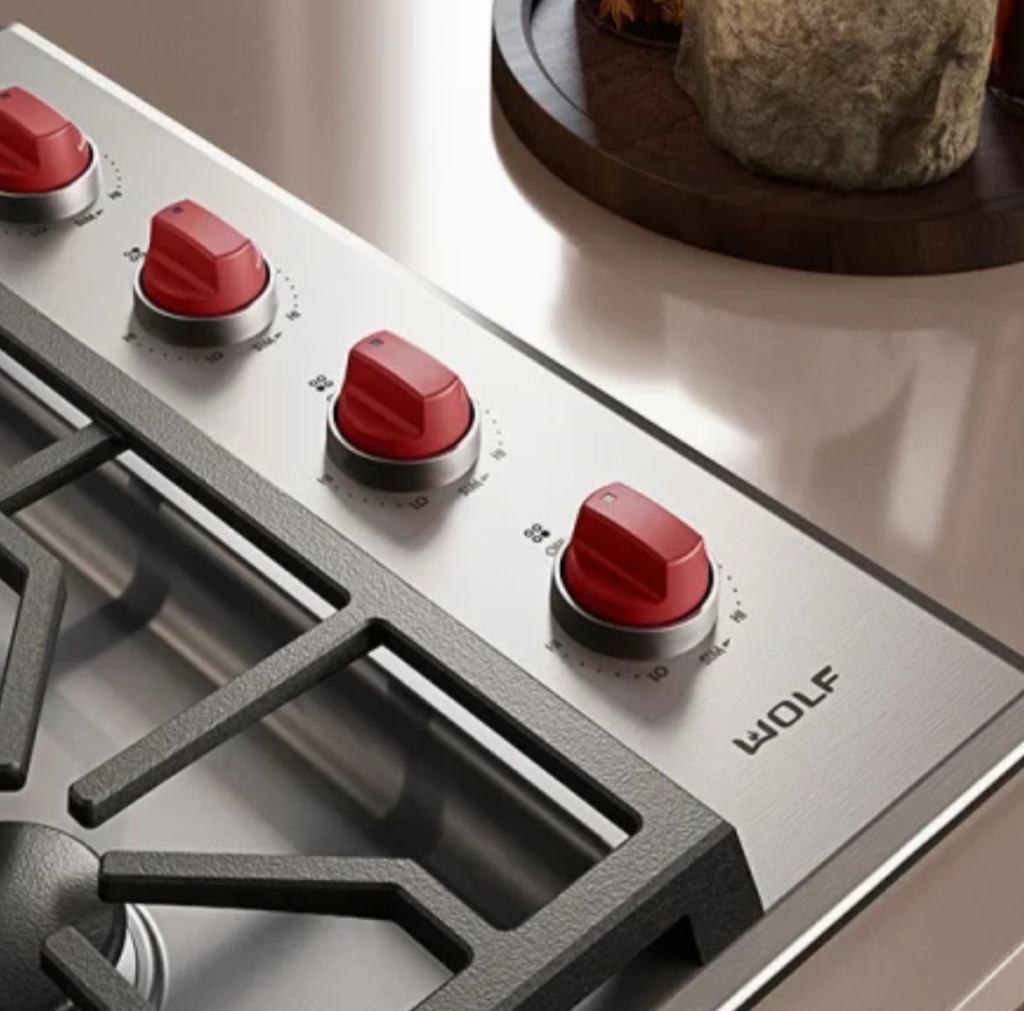
Sealed dual-stacked burners in 15 to 48 inch widths, with independent high-heat and simmer tiers. Service covers igniters, gas valve assemblies, and burner port cleaning.
-
Wolf Induction Cooktop
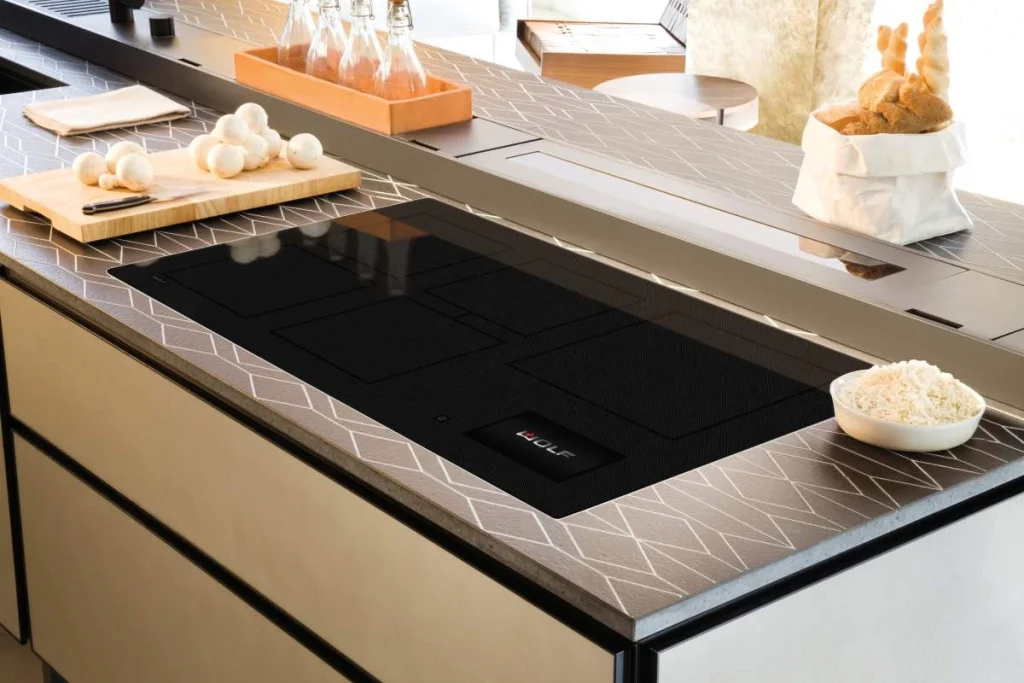
Electromagnetic cooking zones beneath a glass-ceramic surface, fully electronic with no open flame. Service covers induction coils, inverter boards, and touch-control diagnostics.
-
Wolf Transitional Induction Cooktop
Induction zones paired with front-facing tactile controls and stainless trim, distinct from the all-touch Contemporary line. Service covers the same coils and inverter boards, plus the physical control mechanism itself.
-
Wolf Modular Cooktop Components
Individual gas burner, griddle, or grill modules set side by side in a custom countertop layout. Each module has its own gas or electrical connection and is serviced independently.

Common Wolf Cooktop Problems We Diagnose and Fix
Gas and induction cooktops fail in different ways. Here is what each symptom usually points to.

Gas Burner Clicking but Not Igniting
On dual-stacked burners each tier ignites on its own, so a burner that clicks without lighting may have a fault in just the simmer or high-heat tier: a clogged port, a weak igniter, or gas not reaching that tier. We test spark and gas flow separately.

Induction Zone Not Detecting Cookware
An induction zone reads the pan through the coil, sensing a magnetic field. If it will not detect, the cause is usually a coil that has lost connection, an inverter board fault, or a sensor misreading a pan that is actually there. We confirm with known-good cookware first.

Uneven Flame or Burner Output
Flames that differ across burners or burn low point to a clogged port, a misaligned burner cap, or a gas pressure issue on that burner. On dual-stacked burners, each tier can be affected on its own. We clean, align, and verify a clean burn.

Touch Controls Not Responding
A panel that stays dark or ignores input can be a software glitch, a damaged sensor strip, or moisture trapped under the glass. Each needs a different fix, so we isolate the cause before replacing the panel.

Error Code on the Induction Display
An induction code points to a coil, inverter, or sensor fault, but the same code can have more than one cause. We read it, then confirm the real fault by testing the zone directly.

Burner Will Not Turn Off or Stays on High
A burner stuck on, or one that will not drop from high, points to a failed gas valve or, on induction, a control sensor fault reading the wrong setpoint. We treat this as urgent, since a burner that will not shut off is a safety issue.
Gas Burner Clicking but Not Igniting
On dual-stacked burners each tier ignites on its own, so a burner that clicks without lighting may have a fault in just the simmer or high-heat tier: a clogged port, a weak igniter, or gas not reaching that tier. We test spark and gas flow separately.
Induction Zone Not Detecting Cookware
An induction zone reads the pan through the coil, sensing a magnetic field. If it will not detect, the cause is usually a coil that has lost connection, an inverter board fault, or a sensor misreading a pan that is actually there. We confirm with known-good cookware first.
Uneven Flame or Burner Output
Flames that differ across burners or burn low point to a clogged port, a misaligned burner cap, or a gas pressure issue on that burner. On dual-stacked burners, each tier can be affected on its own. We clean, align, and verify a clean burn.
Touch Controls Not Responding
A panel that stays dark or ignores input can be a software glitch, a damaged sensor strip, or moisture trapped under the glass. Each needs a different fix, so we isolate the cause before replacing the panel.
Error Code on the Induction Display
An induction code points to a coil, inverter, or sensor fault, but the same code can have more than one cause. We read it, then confirm the real fault by testing the zone directly.
Burner Will Not Turn Off or Stays on High
A burner stuck on, or one that will not drop from high, points to a failed gas valve or, on induction, a control sensor fault reading the wrong setpoint. We treat this as urgent, since a burner that will not shut off is a safety issue.
What You Get with Every Bristol Repair

Daily work with high-end brands

Accurate diagnosis before any part is ordered

Upfront pricing: you approve the quote before we begin
12-month warranty on parts, 6 months on labor

Licensed and insured in California

Floors and cabinetry protected throughout the visit
view all questions
Frequently Asked Questions

Have Questions About Your Repair?
Tell us the brand and what the appliance is doing, and a technician will take it from there.
What is the difference between a Wolf rangetop and a cooktop?
A Wolf rangetop has the burner layout and heavier build of a range but installs with no oven beneath it, usually paired with a separate wall oven. A cooktop drops into the countertop with a flush, surface-mounted design. The burner and ignition parts are similar, so a burner fault diagnoses much the same way, but the installation and control layout differ. We diagnose based on the unit actually in your kitchen, not the name on the box.
What is a Wolf Transitional induction cooktop, and does it change the repair?
Wolf makes two induction styles. The Contemporary line is all-touch, with controls printed on the glass. The Transitional line pairs the same induction cooking system with front-facing tactile knobs and stainless trim. Underneath, the coils and inverter boards are the same, so induction faults diagnose alike. The difference for a repair is the controls: the Transitional line adds a physical control mechanism that can fail on its own, separate from the induction electronics.
Can you service a single module on a Wolf modular cooktop?
Yes. Wolf modular cooktops are built from separate burner, griddle, and grill units set side by side, and each module has its own gas or electrical connection. A fault in one module usually stays in that module, so we can diagnose and repair a single unit without touching the others. Tell us which module is affected when you book so we bring the right parts.
How is repairing a Wolf gas cooktop different from a Wolf induction cooktop?
They share almost nothing internally, so the repairs are completely different. A gas cooktop fault is usually mechanical or gas-side, like an igniter, a burner port, or a gas valve, and parts tend to cost less. An induction cooktop fault is electronic, a coil, an inverter board, or a touch sensor, and those boards cost more. We confirm which technology your cooktop uses first, because the diagnostic path and the likely cost are not comparable between the two.
Need Wolf Service?
Our licensed, insured technicians are ready to dispatch to your Orange County home.