KitchenAid Ice Maker & Beverage Cooler Repair in Irvine & Orange County
Repair for KitchenAid undercounter ice makers and beverage centers. Clear-ice production, water circuit, and drain diagnostics on ice makers, plus dual-zone temperature and SatinGlide service on beverage coolers.
 Service call fee waived with completed repair
12-month warranty
Genuine OEM KitchenAid parts
Service call fee waived with completed repair
12-month warranty
Genuine OEM KitchenAid parts 5.0/5
Google Rating
20+k
Appliances Serviced
10+k
Satisfied Customers
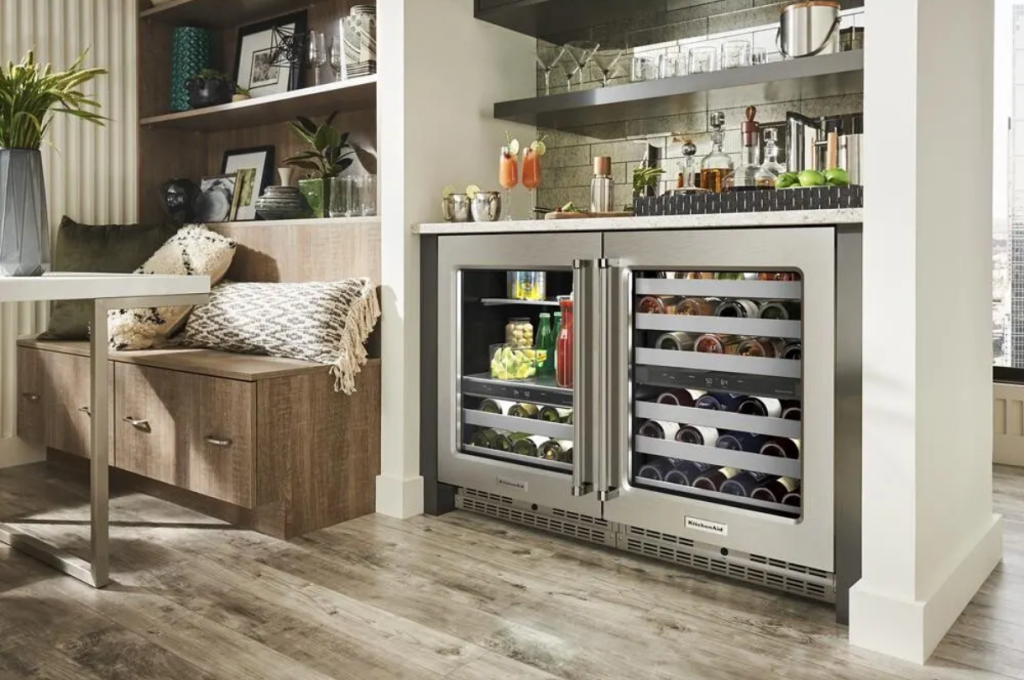
A KitchenAid undercounter ice maker that has stopped making ice or a beverage cooler running warm can fail for reasons that share nothing since the two are different appliances with different systems. That is why KitchenAid ice maker repair and beverage cooler repair start with identifying the exact fault, not guessing from the symptom.
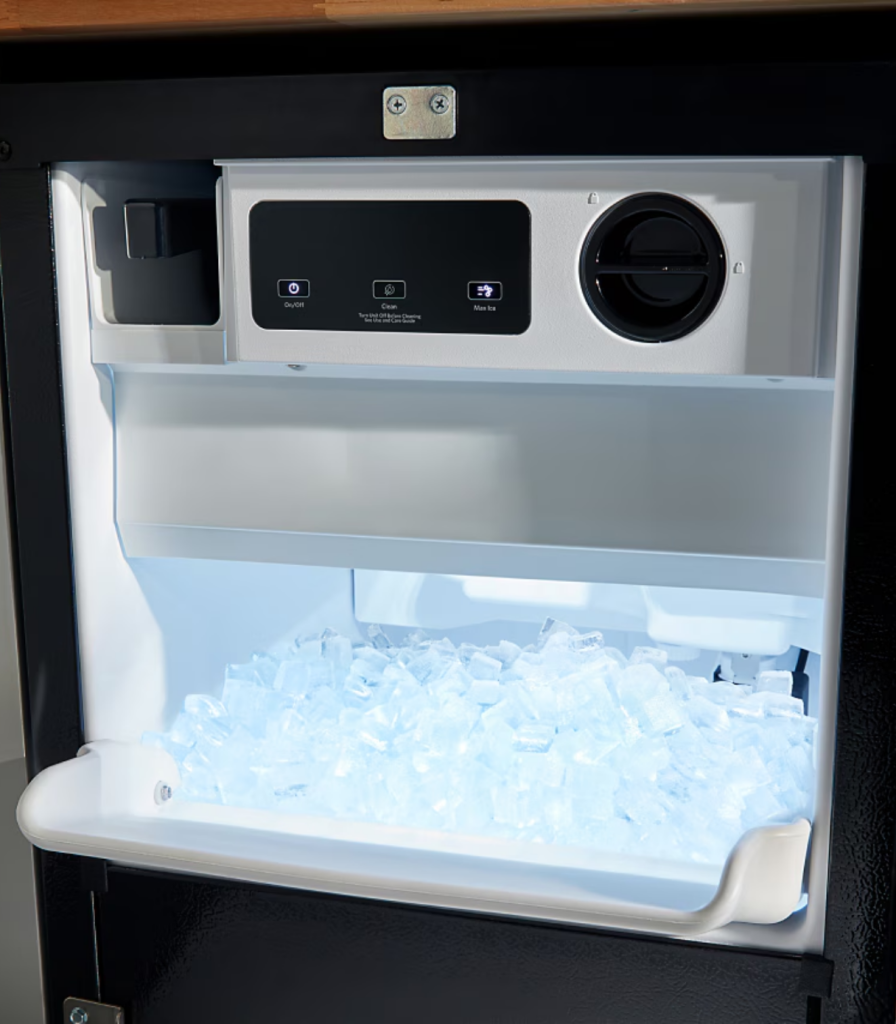
KitchenAid ice makers produce clear ice by circulating water over a freezing plate, a more involved process than a basic ice tray. When production drops or stops, the cause is usually in the water circuit, the inlet valve, the fill line, the pump, or a filter overdue for replacement or in the sealed refrigeration system, rather than the ice mold itself.
Beverage coolers fail differently. A unit running warm, or one zone warmer than the other on dual-zone models, usually points to a dirty condenser, an evaporator fan, or a thermistor, not the compressor. Both are built-in, front-vented units set into cabinetry, so we service them with the same care around panels and finishes that a built-in refrigerator needs.
KitchenAid Ice Maker & Beverage Cooler Models We Repair
We service KitchenAid undercounter ice makers and beverage centers in built-in and freestanding configurations.
-
KitchenAid Undercounter Ice Makers
15- and 18-inch built-in units producing clear ice from a circulating-water freeze plate. Service covers the water inlet valve, circulation pump, freeze plate, drain system, and control board.
-
KitchenAid Ice Makers with Drain Pump
Models installed where gravity drainage is not possible, using a drain pump to clear meltwater. Service adds the drain pump and its float to the standard ice system diagnostics.
-
KitchenAid Undercounter Beverage Centers
24-inch built-in beverage centers with a single temperature zone, glass door, and SatinGlide shelves. Service covers the compressor, evaporator fan, thermistor, door gasket, and lighting.
-
KitchenAid Dual-Zone Beverage Coolers
Two independently controlled temperature zones in one cabinet, sharing a compressor but with separate airflow. When one zone runs warm, we isolate the zone-specific fan, damper, or thermistor.

Common KitchenAid Ice Maker & Beverage Cooler Problems We Diagnose and Fix
Ice makers and beverage coolers fail in different ways. Here is what each symptom usually points to.

Ice Maker Not Producing Ice
A unit that runs but makes no ice usually points to a failed water inlet valve, a frozen or clogged supply line, a failed circulation pump, or a control board not starting the freeze cycle. We test the water circuit and electronics in sequence.

Low Output or Cloudy Ice
Slow production or cloudy, soft ice usually means a water-flow restriction: low supply pressure, a partially blocked inlet valve, or a filter overdue for replacement. We measure flow and clear the restriction.

Ice Maker Leaking or Not Draining
Leaks trace to the inlet valve fitting or the drain line, while standing meltwater points to a clogged drain or a failed drain pump on units without a floor drain. We find the source before disassembly.

Beverage Cooler Not Cooling or Running Warm
A beverage center above setpoint usually means a dirty condenser, a failing evaporator fan, a refrigerant leak, or a faulty thermistor. On front-vented units a blocked grille is a frequent factor.

One Beverage Zone Warmer Than the Other
On dual-zone models both zones share one compressor but run separate airflow. A warm zone points to a failed damper, a zone-specific fan, or a thermistor error, not the compressor itself.

Condensation, Noise, or Lighting Fault
Interior condensation usually means a worn door gasket. Loud noise points to the compressor or fan, and a dead interior light is the LED or its wiring. We diagnose each on its own.
Ice Maker Not Producing Ice
A unit that runs but makes no ice usually points to a failed water inlet valve, a frozen or clogged supply line, a failed circulation pump, or a control board not starting the freeze cycle. We test the water circuit and electronics in sequence.
Low Output or Cloudy Ice
Slow production or cloudy, soft ice usually means a water-flow restriction: low supply pressure, a partially blocked inlet valve, or a filter overdue for replacement. We measure flow and clear the restriction.
Ice Maker Leaking or Not Draining
Leaks trace to the inlet valve fitting or the drain line, while standing meltwater points to a clogged drain or a failed drain pump on units without a floor drain. We find the source before disassembly.
Beverage Cooler Not Cooling or Running Warm
A beverage center above setpoint usually means a dirty condenser, a failing evaporator fan, a refrigerant leak, or a faulty thermistor. On front-vented units a blocked grille is a frequent factor.
One Beverage Zone Warmer Than the Other
On dual-zone models both zones share one compressor but run separate airflow. A warm zone points to a failed damper, a zone-specific fan, or a thermistor error, not the compressor itself.
Condensation, Noise, or Lighting Fault
Interior condensation usually means a worn door gasket. Loud noise points to the compressor or fan, and a dead interior light is the LED or its wiring. We diagnose each on its own.
What You Get with Every Bristol Repair

Daily work with high-end brands

Accurate diagnosis before any part is ordered

Upfront pricing: you approve the quote before we begin
12-month warranty on parts, 6 months on labor

Licensed and insured in California

Floors and cabinetry protected throughout the visit
view all questions
Frequently Asked Questions

Have Questions About Your Repair?
Tell us the brand and what the appliance is doing, and a technician will take it from there.
Why is my KitchenAid ice maker making cloudy or soft ice?
Cloudy or soft ice from a KitchenAid ice maker usually points to the water, not the freezer. These units make clear ice by circulating water over a freeze plate, and when a filter is overdue, the supply pressure is low, or the circulation pump is weak, minerals do not get flushed out, and the ice comes out cloudy or does not fully freeze. We check the filter and water flow first, then the pump, before looking at the sealed system.
How often should I replace the filter on my KitchenAid ice maker?
KitchenAid recommends replacing the ice maker's water filter about every six to twelve months, and more often here because much of Orange County has hard water. A clogged filter restricts flow, which lowers production and clouds the ice. If your ice maker slowed down gradually rather than stopping all at once, the filter is the first thing we check.
What temperature should a KitchenAid beverage cooler be set to?
A KitchenAid beverage cooler is usually set between 34 and 42°F for a single zone. On dual-zone models each zone is set independently within that range. What matters more than the exact number is stability: a healthy unit holds within a degree or two of the setpoint. If yours swings by several degrees, something is failing regardless of what the display shows, and we measure the actual cabinet temperature to confirm.
Is my KitchenAid ice maker the same as the one in my refrigerator?
No. A KitchenAid undercounter ice maker is a standalone appliance with its own compressor, sealed system, water circuit, and control board, and it makes clear ice by circulating water. The ice maker built into a KitchenAid refrigerator is part of that refrigerator's system and is diagnosed with the fridge. This page covers the standalone units. If you are unsure which you have, tell us the model when you book, and we will confirm.
Need Reliable Ice Maker & Beverage Cooler Repair Today?
Speak directly with a technician and get fast, precise service backed by warranty.