Wolf Oven Repair in Irvine & Orange County
Repair for Wolf built-in wall ovens: single, double, M Series, and E Series. VertiCross convection diagnostics, temperature calibration, control board service, and door sealing.
 Service call fee waived with completed repair
12-month warranty
Genuine OEM Wolf parts
Service call fee waived with completed repair
12-month warranty
Genuine OEM Wolf parts 5.0/5
Google Rating
20+k
Appliances Serviced
10+k
Satisfied Customers
A Wolf wall oven that bakes unevenly, will not reach temperature, or shows an error rarely tells you why from the outside. Wolf’s dual VertiCross convection heats from both sides of the cavity, so a fan, element, or sensor fault on just one side can skew your baking without an obvious sign of the cause.
Double-wall ovens add to the puzzle. Each cavity runs its own elements and sensors behind one shared control interface, so the same symptom in the top oven can point to a different part than it would in the bottom. The two are diagnosed separately, not as one unit.
Calibration drift is the quiet one. A sensor reading a few degrees off does not trigger a code. It just changes how food bakes until you notice over time. And built-in installation, with the oven set into a tight cabinet opening, changes how service access works compared to a freestanding unit. We account for all of it before ordering a part.
Wolf Oven Models We Repair
We service every Wolf built-in wall oven, from single and double configurations to the M Series and E Series.
-
Wolf Single Wall Oven
Built-in 30-inch electric convection oven with dual VertiCross airflow. Service covers heating elements, convection fans, temperature sensors, and control board diagnostics.
-
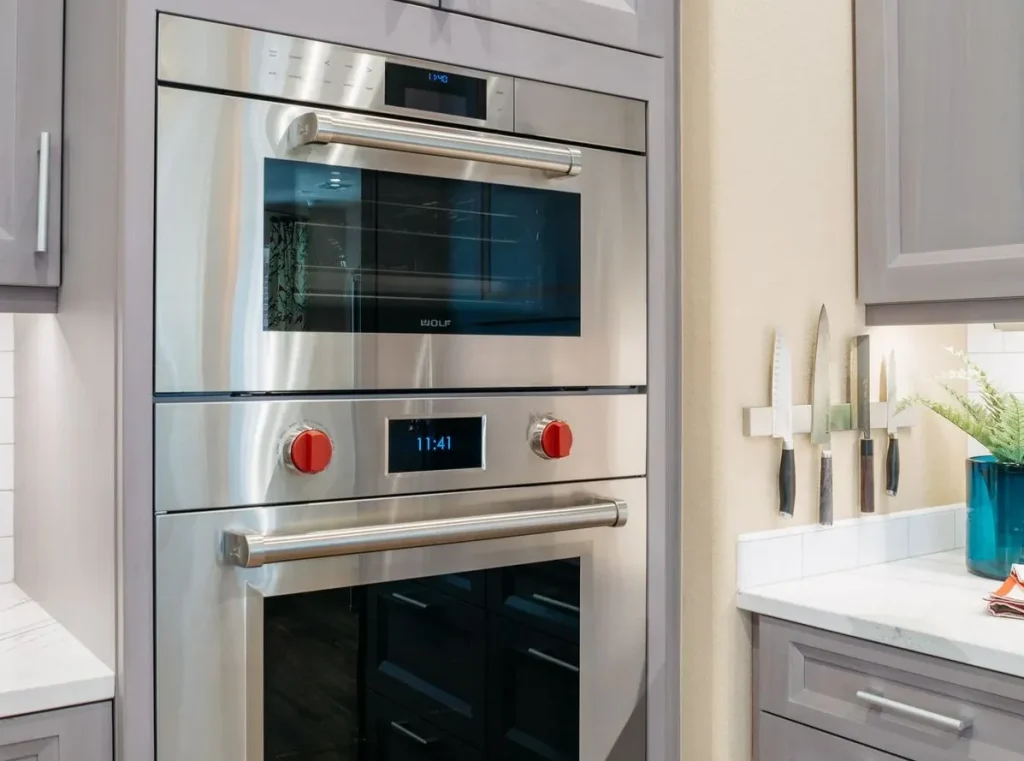
Wolf Double Wall Oven
Two independently controlled ovens stacked in a single built-in cabinet. Each cavity runs its own heating elements and sensors behind a shared control interface, so a fault in one does not necessarily affect the other.
-
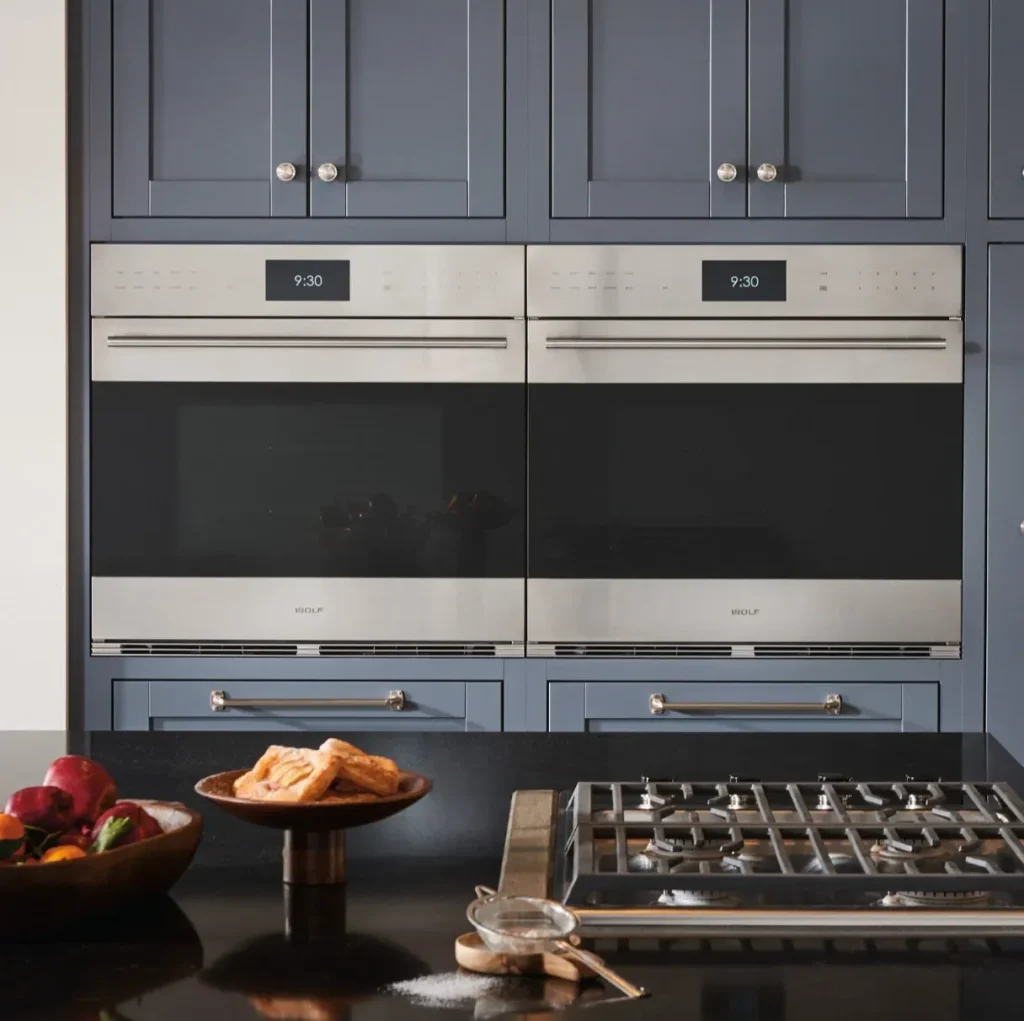
Wolf M Series Oven
Wolf's contemporary line with a touch-screen interface and additional cooking modes. Diagnostics include the digital control module alongside the standard convection and sensor components.
-
Wolf E Series Oven
A more traditional line with knob and button controls instead of a full touch interface, running the same dual convection underneath. Service covers the shared heating and sensor components plus the mechanical knob and switch assembly specific to this series.

Common Wolf Oven Problems We Diagnose and Fix
Most Wolf oven calls trace back to convection, a sensor, the controls, or the door. Here is what each symptom usually points to.
Heating Unevenly
Wolf's dual VertiCross convection heats from both sides of the cavity, so uneven baking usually means a fan or element on one side is underperforming. We test each side independently instead of assuming one shared cause.
Not Reaching the Set Temperature
Usually a temperature sensor reading low, a degraded heating element, or a control board fault. We measure actual cavity temperature against the display before replacing a part.

One Side of a Double Oven Not Working
Each cavity in a Wolf double-wall oven has its own elements and sensors behind a shared interface, so a single-side fault almost always sits in that cavity, not the shared board. We test the affected side on its own.

Display or Control Panel Error
On M Series touch controls and E Series knob controls, the failure points differ. We isolate the interface from the main board and the wiring before replacing anything.

Oven Door Not Sealing
A door that no longer seals lets heat escape and skews baking. Usually a worn gasket or a hinge out of alignment. We reseat or replace the seal and align the hinges.

Self-Clean Cycle Not Completing
A self-clean that stalls or throws a fault is often a failed door lock motor or a sensor the cycle cannot trust at high heat. We test the lock and sensor before running it again.
Heating Unevenly
Wolf's dual VertiCross convection heats from both sides of the cavity, so uneven baking usually means a fan or element on one side is underperforming. We test each side independently instead of assuming one shared cause.
Not Reaching the Set Temperature
Usually a temperature sensor reading low, a degraded heating element, or a control board fault. We measure actual cavity temperature against the display before replacing a part.
One Side of a Double Oven Not Working
Each cavity in a Wolf double-wall oven has its own elements and sensors behind a shared interface, so a single-side fault almost always sits in that cavity, not the shared board. We test the affected side on its own.
Display or Control Panel Error
On M Series touch controls and E Series knob controls, the failure points differ. We isolate the interface from the main board and the wiring before replacing anything.
Oven Door Not Sealing
A door that no longer seals lets heat escape and skews baking. Usually a worn gasket or a hinge out of alignment. We reseat or replace the seal and align the hinges.
Self-Clean Cycle Not Completing
A self-clean that stalls or throws a fault is often a failed door lock motor or a sensor the cycle cannot trust at high heat. We test the lock and sensor before running it again.
What You Get with Every Bristol Repair

Daily work with high-end brands

Accurate diagnosis before any part is ordered
Upfront pricing: you approve the quote before we begin
12-month warranty on parts, 6 months on labor
Licensed and insured in California

Floors and cabinetry protected throughout the visit
view all questions
Frequently Asked Questions

Have Questions About Your Repair?
Tell us the brand and what the appliance is doing, and a technician will take it from there.
What is Wolf VertiCross convection, and how does it affect a repair?
VertiCross is Wolf's convection design: instead of a single rear fan, it circulates heat from fans and elements on both sides of the cavity for more even baking. For a repair, that means uneven results usually come from one side underperforming, a slowing fan or a weak element, rather than a single shared part. We test each side of the convection system on its own, so we fix the side that is actually off instead of replacing components that are working fine.
My Wolf double oven has one side not working. Is it the control board?
Usually not. Each cavity in a Wolf double-wall oven runs its own heating elements and temperature sensor, with only the control interface shared between them. So when one oven works and the other does not, the fault almost always sits in the failed cavity's own components, not the shared board. We test the affected cavity in isolation, which usually means the repair is far less involved and less expensive than a control board replacement.
What is the difference between Wolf M Series and E Series ovens for repair?
They cook the same way but differ at the controls, which changes the repair. M Series ovens use a full touch-screen interface, so control faults tend to involve the display module and its board. E Series ovens use knobs and buttons, so control faults are more often a switch or the mechanical control assembly. The heating, convection, and sensor components underneath are similar across both, so we identify your series first and focus the diagnosis where that line actually fails.
Why won't my Wolf oven reach the set temperature?
This is most often a temperature sensor reading low and telling the board the oven is hotter than it is, a heating element that has degraded and produces less heat, or a control board fault. The three look identical from the front. We measure the actual cavity temperature against the display to confirm the gap, then test the sensor and element directly before replacing anything.
Need Wolf Service?
Our licensed, insured technicians are ready to dispatch to your Orange County home.